
Introduction
Ask an SDR what determines a successful day and you'll probably hear about conversations, meetings booked, or opportunities created. Those are all important outcomes, but they are not always where a productive day is won or lost.
The biggest difference between an average outbound calling day and a strong one often comes down to what happens between calls.
The Short Version
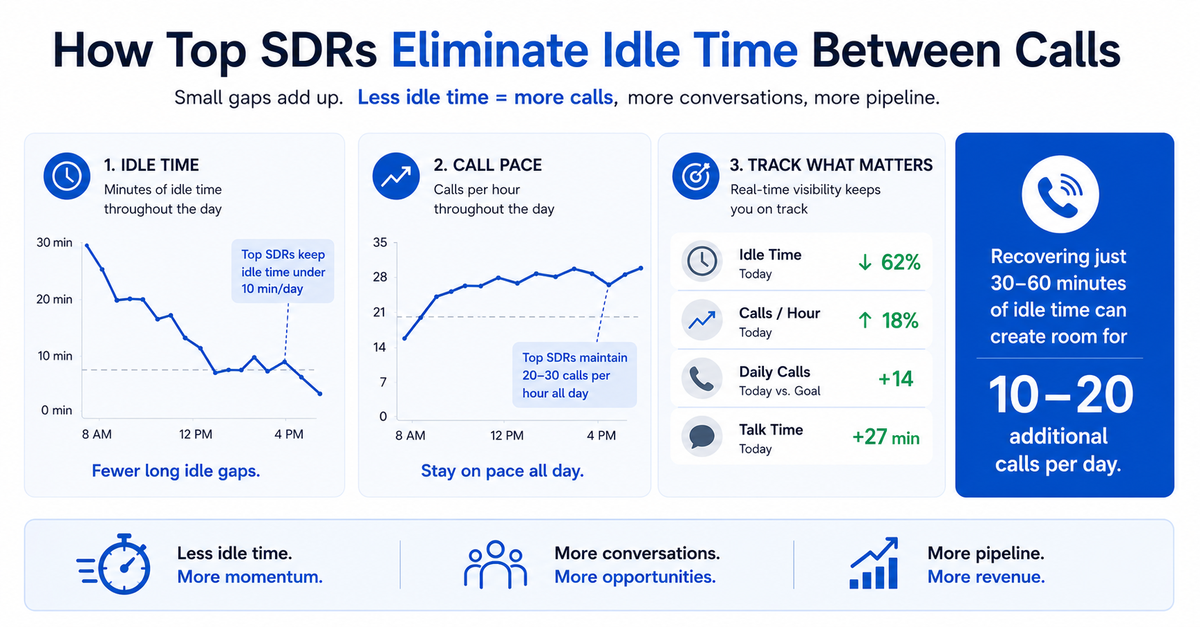
Top SDRs do not simply work harder. They reduce wasted time between calls, keep a close eye on call pace, and correct slowdowns while the day is still in motion. Recovering just 30 to 60 minutes of unnecessary idle time can create room for 10 to 20 additional calls per day.
Where Calling Days Are Really Lost
Consider two SDRs who spend about the same amount of time actually talking to prospects. One finishes the day with 65 calls, while the other reaches 82. Assuming similar connect rates, that difference can create a meaningful advantage in conversations, opportunities, and pipeline.
The difference usually is not talk time. It is idle time.
Top SDRs do not magically create more hours in the day. They simply lose fewer of those hours deciding who to call next, checking email after every conversation, updating systems between every dial, or getting pulled into tasks that could wait until later.
Why Small Gaps Matter
A few extra minutes between calls may not feel like a problem in the moment. Two minutes here, three minutes there, and one longer pause after a difficult conversation can all feel reasonable. The problem is that those gaps repeat throughout the day.
By the time the day is over, small delays can turn into thirty, forty, or even sixty minutes of lost calling time. The rep may feel busy the entire day, but the call count tells a different story.
The Math Is Simple
If an average call cycle, including dialing, ringing, logging, and the conversation itself, takes about three minutes, recovering thirty minutes of unnecessary idle time creates room for roughly 10 additional calls. Recovering an hour can create room for 20 or more.
That does not require a longer workday. It requires better control of the time that already exists.
What Top SDRs Watch
Average SDRs...
- Notice call volume after the day is over.
- Lose momentum between conversations.
- Let email and updates interrupt calling blocks.
- Feel busy without knowing if they are on pace.
- Try to catch up late in the day.
Top SDRs...
- Watch idle time while it is happening.
- Keep moving from one call to the next.
- Protect calling blocks from avoidable interruptions.
- Use call pace to stay aware throughout the day.
- Correct slowdowns before they become missed goals.
Why Real-Time Visibility Changes Behavior
This is why idle time matters as much as call volume. Call count is the outcome everyone sees, but idle time is one of the behaviors that produces it. When an SDR can see the gaps between calls growing, the problem becomes actionable immediately.
The same principle applies to call pace. A slow first hour can often be recovered. A slow first four hours usually cannot. Seeing pace throughout the day gives the rep a chance to adjust before the numbers are out of reach.
How CallSparq Fits In
CallSparq is built around that practical reality. It gives outbound sales reps real-time visibility into call pace, talk time, idle time, and progress toward daily goals. Instead of waiting until the end of the day to discover that productivity slipped, reps can see what is happening while there is still time to correct it.
The goal is not to make reps feel monitored. The goal is to give reps the same kind of live feedback that helps them manage their own performance. If idle time is creeping up, they can tighten the gap. If call pace is slipping, they can increase focus. If they are on track, they can keep the momentum going.
Conclusion
Top SDRs do not win simply because they work harder. They win because they waste less time between calls, protect their momentum, and stay aware of their pace throughout the day.
More conversations usually do not come from adding hours. They come from reclaiming the minutes that were already there.